
Family File for David Saul MITTMAN - Person Sheet
Family File for David Saul MITTMAN - Person Sheet
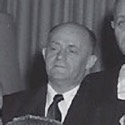


MemoPre-WWI was Stavishche, Tarashcha, Kiev, Russian Empire
Emigrationbef 4 Dec 1924, Constanța, Romania [1061] Age: 15
Immigration4 Dec 1924, New York, NY [1061] Age: 15
Declared Intent8 Apr 1929, 1504 S Kolin Ave, Chicago, IL [1061] Age: 19
Naturalization22 Oct 1935, Chicago, IL Age: 26
Death15 Nov 1960, 234 N Austin Blvd, Oak Park, IL Age: 51
Burialaft 15 Nov 1960, 4301 Roosevelt Rd, Hillside, IL [1063]
MemoOakridge-Glen Oak Cemetery
OccupationProprietor in Retail Bookshop (1950) [1064]
OccupationSalesman in a Bookshop (1940) [1065]
OccupationBuffer in a Millinery Factor (1930) [1066]
FlagsMITTMAN-1, STUB-END
FatherJoseph DOZORETZ
MotherHinda GOOTA
Gemini Pro Sketch
Prompt: Generate a biographical sketch using the genealogical information in the attached Ancestor report. The sketch should be no longer than one page, and reference the history and context of the dates and places referenced in the attached file.
A Journey from Shtetl to Suburb
Victor Joseph Dozoretz’s life was a testament to the turbulent history and transformative opportunities of the 20th century. Born on August 14, 1909, in Stavyshche, Kyiv Oblast, Ukraine, he was the son of Joseph Dozoretz and Hinda Goota. At the time of his birth, Stavyshche was a shtetl — a small town with a significant Jewish population — within the Russian Empire's Pale of Settlement. Life for Jews in this region was precarious, marked by restrictions and the threat of violent pogroms that swept through the area in the early 1900s, compelling many, likely including the Dozoretz family, to seek refuge abroad.
Building a New Life in Chicago
By 1930, Victor was living in Chicago, part of a great wave of Eastern European Jewish immigration that profoundly shaped the city's character. He found work as a buffer in a millinery factory, an industry that was a significant employer in the city. It was here, amidst the economic turmoil of the Great Depression, that his life became intertwined with that of Albina Ester Rietman. Albina, born in Lublin, Poland, on July 28, 1910, was also employed in the hat-making trade as a trimmer. The couple married in Cook County, Illinois, on October 10, 1931.
Their shared experience in the millinery trade was the foundation of their early life together. However, as the decade progressed, Victor transitioned into a new career. The 1940 census records him as a salesman in a bookshop, a move that signaled a departure from factory work. This professional shift culminated in the post-war prosperity of the 1950s, when Victor became the proprietor of his retail bookshop. Albina worked alongside him as a clerk, making the business a true family enterprise. This journey from factory laborer to small business owner encapsulates a classic American narrative of upward mobility through hard work and determination.
Later Years and Legacy
Victor's success allowed the couple to move to Oak Park, a suburb just west of Chicago. Tragically, his life was cut short when he passed away on November 15, 1960, at the age of 51. He was buried in Oakridge Glen Oaks Cemetery in Hillside, Illinois. Albina passed away seven years later, on November 30, 1967, and was laid to rest beside him. Victor Dozoretz's story is a poignant reflection of an immigrant generation that fled persecution, embraced the challenges of a new world, and built a lasting legacy for their family.
A Journey from Shtetl to Suburb
Victor Joseph Dozoretz’s life was a testament to the turbulent history and transformative opportunities of the 20th century. Born on August 14, 1909, in Stavyshche, Kyiv Oblast, Ukraine, he was the son of Joseph Dozoretz and Hinda Goota. At the time of his birth, Stavyshche was a shtetl — a small town with a significant Jewish population — within the Russian Empire's Pale of Settlement. Life for Jews in this region was precarious, marked by restrictions and the threat of violent pogroms that swept through the area in the early 1900s, compelling many, likely including the Dozoretz family, to seek refuge abroad.
Building a New Life in Chicago
By 1930, Victor was living in Chicago, part of a great wave of Eastern European Jewish immigration that profoundly shaped the city's character. He found work as a buffer in a millinery factory, an industry that was a significant employer in the city. It was here, amidst the economic turmoil of the Great Depression, that his life became intertwined with that of Albina Ester Rietman. Albina, born in Lublin, Poland, on July 28, 1910, was also employed in the hat-making trade as a trimmer. The couple married in Cook County, Illinois, on October 10, 1931.
Their shared experience in the millinery trade was the foundation of their early life together. However, as the decade progressed, Victor transitioned into a new career. The 1940 census records him as a salesman in a bookshop, a move that signaled a departure from factory work. This professional shift culminated in the post-war prosperity of the 1950s, when Victor became the proprietor of his retail bookshop. Albina worked alongside him as a clerk, making the business a true family enterprise. This journey from factory laborer to small business owner encapsulates a classic American narrative of upward mobility through hard work and determination.
Later Years and Legacy
Victor's success allowed the couple to move to Oak Park, a suburb just west of Chicago. Tragically, his life was cut short when he passed away on November 15, 1960, at the age of 51. He was buried in Oakridge Glen Oaks Cemetery in Hillside, Illinois. Albina passed away seven years later, on November 30, 1967, and was laid to rest beside him. Victor Dozoretz's story is a poignant reflection of an immigrant generation that fled persecution, embraced the challenges of a new world, and built a lasting legacy for their family.
Narrative
Victor DOZORETZ (born Awigdor DIZORETZ) emigrated from Kyiv Oblast (region) via the Romanian port city of Constanța (Constanza), Romania, in 1924. He boarded the Fabre Line’s SS Asia for the approximately 30-day passage through the Black Sea, the Mediterranean, and across the Atlantic.
Rather than sailing direct for New York, as so many of our Eastern European Jewish ancestors did, the SS Asia sailed for Providence, Rhode Island, where passengers disembarked for trains or steamships to New York. Why this unusual route? As described in Aboard the Fabre Line to Providence: Immigration to Rhode Island:
“…the port of New York was experiencing extreme congestion, so the federal government asked steamship companies to transfer tonnage and traffic to other ports. One of these companies—Compagnie Française de Navigation à Vapeur, commonly known as the Fabre Line—responded to this request and, in 1911, chose Providence as the port where it would establish ancillary operations.”
Here’s a description of the Fabre Line itinerary from Aboard the Fabre Line to Providence: Immigration to Rhode Island; I have not found a record of the SS Asia’s ports of calls in December 1924, so we’ll have to be satisfied with this more general description:
“By the early months of 1924, an eastern route had become a new sailing pattern for the Fabre Line. Vessels left Marseilles and sailed to Alexandria, Egypt; then to Lebanon, Syria, and Turkish ports; and then into the Black Sea to Constanza, Romania, about two hundred miles south of the Ukrainian seaport of Odesa. The return included calls at Greek and Italian ports, with ships sometimes calling at Algiers before clearing the Mediterranean for Lisbon and the Azores and on to Providence and New York. Fabre vessels did not regularly call at all of the eastern Mediterranean ports named here, but during a two-month period, they usually managed to visit each of them. In some of these countries, the line varied its ports of call. All sailings at this time included calls at the Azores, and most included Lisbon. Fabre steamers continued plying the older route from Marseilles, Naples, Lisbon, and the Azores to America. Still, the new and more diverse cruising pattern continued during the remainder of the line’s days at Providence.”
Passenger arrival records for the SS Asia at Providence in December 1924 are missing from the online collection “U.S., Atlantic Ports Arriving and Departing Passenger and Crew Lists, 1820-1959” at Ancestry.com (https://www.ancestry.com/search/collections/8758/). The records may be in the National Archives microfilm publication, “T792 - Book Indexes, Providence Passenger Lists, 1911-1934.”
A tantalizing clue provides additional evidence that this description of Victor’s voyage to America is as accurate as possible: Aboard the Fabre Line contains a table of Transatlantic Arrivals and Departures of Fabre Vessels at the Port of Providence. The table covers the period from 1911 through 1934. Beginning in 1920, the SS Asia made many stops in Providence, with her arrival and departure separated by a seven- to ten-day stay, for instance, February 14 through 22, 1921. Some entries are incomplete and are missing their arrival date; for instance, there is no corresponding arrival entry for SS Asia’s departure on November 16, 1921. Such is the case for December 1924: the table is missing the arrival date for SS Asia’s departure from Providence on December 11, 1924. Given that the departure date is usually seven to ten days after arrival, one can be reasonably confident that the arrival date for SS Asia was consistent with Victor’s December 4, 1924, arrival in the United States.
Jennings Jr., William J., Conley, Patrick T. Aboard the Fabre Line to Providence: Immigration to Rhode Island. Arcadia Publishing Inc. Kindle Edition.
Rather than sailing direct for New York, as so many of our Eastern European Jewish ancestors did, the SS Asia sailed for Providence, Rhode Island, where passengers disembarked for trains or steamships to New York. Why this unusual route? As described in Aboard the Fabre Line to Providence: Immigration to Rhode Island:
“…the port of New York was experiencing extreme congestion, so the federal government asked steamship companies to transfer tonnage and traffic to other ports. One of these companies—Compagnie Française de Navigation à Vapeur, commonly known as the Fabre Line—responded to this request and, in 1911, chose Providence as the port where it would establish ancillary operations.”
Here’s a description of the Fabre Line itinerary from Aboard the Fabre Line to Providence: Immigration to Rhode Island; I have not found a record of the SS Asia’s ports of calls in December 1924, so we’ll have to be satisfied with this more general description:
“By the early months of 1924, an eastern route had become a new sailing pattern for the Fabre Line. Vessels left Marseilles and sailed to Alexandria, Egypt; then to Lebanon, Syria, and Turkish ports; and then into the Black Sea to Constanza, Romania, about two hundred miles south of the Ukrainian seaport of Odesa. The return included calls at Greek and Italian ports, with ships sometimes calling at Algiers before clearing the Mediterranean for Lisbon and the Azores and on to Providence and New York. Fabre vessels did not regularly call at all of the eastern Mediterranean ports named here, but during a two-month period, they usually managed to visit each of them. In some of these countries, the line varied its ports of call. All sailings at this time included calls at the Azores, and most included Lisbon. Fabre steamers continued plying the older route from Marseilles, Naples, Lisbon, and the Azores to America. Still, the new and more diverse cruising pattern continued during the remainder of the line’s days at Providence.”
Passenger arrival records for the SS Asia at Providence in December 1924 are missing from the online collection “U.S., Atlantic Ports Arriving and Departing Passenger and Crew Lists, 1820-1959” at Ancestry.com (https://www.ancestry.com/search/collections/8758/). The records may be in the National Archives microfilm publication, “T792 - Book Indexes, Providence Passenger Lists, 1911-1934.”
A tantalizing clue provides additional evidence that this description of Victor’s voyage to America is as accurate as possible: Aboard the Fabre Line contains a table of Transatlantic Arrivals and Departures of Fabre Vessels at the Port of Providence. The table covers the period from 1911 through 1934. Beginning in 1920, the SS Asia made many stops in Providence, with her arrival and departure separated by a seven- to ten-day stay, for instance, February 14 through 22, 1921. Some entries are incomplete and are missing their arrival date; for instance, there is no corresponding arrival entry for SS Asia’s departure on November 16, 1921. Such is the case for December 1924: the table is missing the arrival date for SS Asia’s departure from Providence on December 11, 1924. Given that the departure date is usually seven to ten days after arrival, one can be reasonably confident that the arrival date for SS Asia was consistent with Victor’s December 4, 1924, arrival in the United States.
Jennings Jr., William J., Conley, Patrick T. Aboard the Fabre Line to Providence: Immigration to Rhode Island. Arcadia Publishing Inc. Kindle Edition.
Obituaries
From 16 Nov 1960, 45 - Chicago Tribune at Newspapers.com:
Victor J Dozoretz
Victor J Dozoretz, 51, of 234 N Austin Blvd, Oak Park, who operated book shops in the Loop area for 30 years, died yesterday in his home. Mr. Dozoretz, who was blind, ran a shop at 408 S Wabash Ave until the building was razed last year. Surviving are his widow, Albina; a son, Mitri J; and a daughter, Helene. Services will be held at 1 pm in the [Weinstein & Sons] chapel at 1300 Devon Ave.
Weinstein & Sons original funeral home was located at 1300 W. Devon Avenue. It was opened on February 1, 1955.
Victor J Dozoretz
Victor J Dozoretz, 51, of 234 N Austin Blvd, Oak Park, who operated book shops in the Loop area for 30 years, died yesterday in his home. Mr. Dozoretz, who was blind, ran a shop at 408 S Wabash Ave until the building was razed last year. Surviving are his widow, Albina; a son, Mitri J; and a daughter, Helene. Services will be held at 1 pm in the [Weinstein & Sons] chapel at 1300 Devon Ave.
Weinstein & Sons original funeral home was located at 1300 W. Devon Avenue. It was opened on February 1, 1955.
Spouses
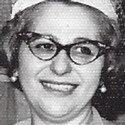
ImmigrationAug 1929, New York, NY [188] Age: 19
Death30 Nov 1967, Oak Park, IL [8] Age: 57
Burial4 Dec 1967, 4301 Roosevelt Rd, Hillside, IL [8]
MemoOakridge-Glen Oak Cemetery; Memorial ID, 250527265
OccupationClerk in Retail Bookshop (1950) [1058]
OccupationBeautician in a Private Business (1940) [1059]
OccupationTrimmer in a Millinery Shop (1930) [1060]
FlagsMITTMAN-1
FatherAaron GETRAITMAN (1881-1963)
MotherEsther WEINRIB (1892-1982)
Narrative
Bina was born in Lublin on 28 Jul 1910 to Aron and Estera GIETRAJTMAN. [385]
In 1910, Lublin was part of the “Congress Poland” in the Russian Partition of Poland. Russian rule ended in 1915 when German and Austro-Hungarian armies occupied the city. Poland regained its independence in 1918 at the end of World War I.
In 1910, Lublin was part of the “Congress Poland” in the Russian Partition of Poland. Russian rule ended in 1915 when German and Austro-Hungarian armies occupied the city. Poland regained its independence in 1918 at the end of World War I.
Obituaries
From Ancestry.com - Historical Newspapers, Birth, Marriage, & Death Announcements, 1851-2003:
Mrs. Albina Dozoreiz
Services for Mrs. Albina Dozoretz, 57, of 1046 N Lathrop Ave, River Forest, will be held at noon Monday in the chapel, 1300 Devon Ave. Mrs. Dozoretz, who has owned the Vi-Del Beauty salon at 510 S Oak Park Ave, Oak Park, for the last 10 years, died Thursday in Oak Park Hospital. Surviving are a son, Mitri; a daughter, Mrs. Helene Ligocki; three grandchildren; her mother, Mrs. Esther Rietman; two brothers; and two sisters.
From Dec 03, 1967, page 51 - Chicago Tribune at Newspapers.com: [384]
Dozoretz
Albina Dozoretz of 1046 N. Lathrop Avenue, River Forest, beloved wife of the late Victor; loving mother of Mitri [Deborah] of Skokie and Helene [Robert) Ligocki of Oak Park; three grandchildren: dear daughter of Esther Rietman; loving sister of Sol, Dan, Mary Schultz, and Frances Hochfelder. Services Monday, noon, at Weinstein Bros. Chapel, 1300 W. Devon Avenue, Interment Glen Oak cemetery. Member of West Suburban Temple, Rar-Zion. Please omit flowers. Chapel visitation is on Sunday evening. Information, RO 1-2400.
Mrs. Albina Dozoreiz
Services for Mrs. Albina Dozoretz, 57, of 1046 N Lathrop Ave, River Forest, will be held at noon Monday in the chapel, 1300 Devon Ave. Mrs. Dozoretz, who has owned the Vi-Del Beauty salon at 510 S Oak Park Ave, Oak Park, for the last 10 years, died Thursday in Oak Park Hospital. Surviving are a son, Mitri; a daughter, Mrs. Helene Ligocki; three grandchildren; her mother, Mrs. Esther Rietman; two brothers; and two sisters.
From Dec 03, 1967, page 51 - Chicago Tribune at Newspapers.com: [384]
Dozoretz
Albina Dozoretz of 1046 N. Lathrop Avenue, River Forest, beloved wife of the late Victor; loving mother of Mitri [Deborah] of Skokie and Helene [Robert) Ligocki of Oak Park; three grandchildren: dear daughter of Esther Rietman; loving sister of Sol, Dan, Mary Schultz, and Frances Hochfelder. Services Monday, noon, at Weinstein Bros. Chapel, 1300 W. Devon Avenue, Interment Glen Oak cemetery. Member of West Suburban Temple, Rar-Zion. Please omit flowers. Chapel visitation is on Sunday evening. Information, RO 1-2400.
ChildrenMitri J (1937-)
Helene Ann (1942-)